Companion robots, smart diapers and fall sensors to support care workers, with home trials starting next year
Facing a projected shortage of nearly 1 million care workers in the coming decades, South Korea plans to use robots and artificial intelligence monitoring systems to help fill gaps in care for its aging population, the Ministry of Health and Welfare said Tuesday.
Pilot programs will begin next year in more than 400 households in Seongnam, Gyeonggi Province, and Mokpo and Yeongam, South Jeolla Province, alongside trials of AI welfare consultations in 10 regions.
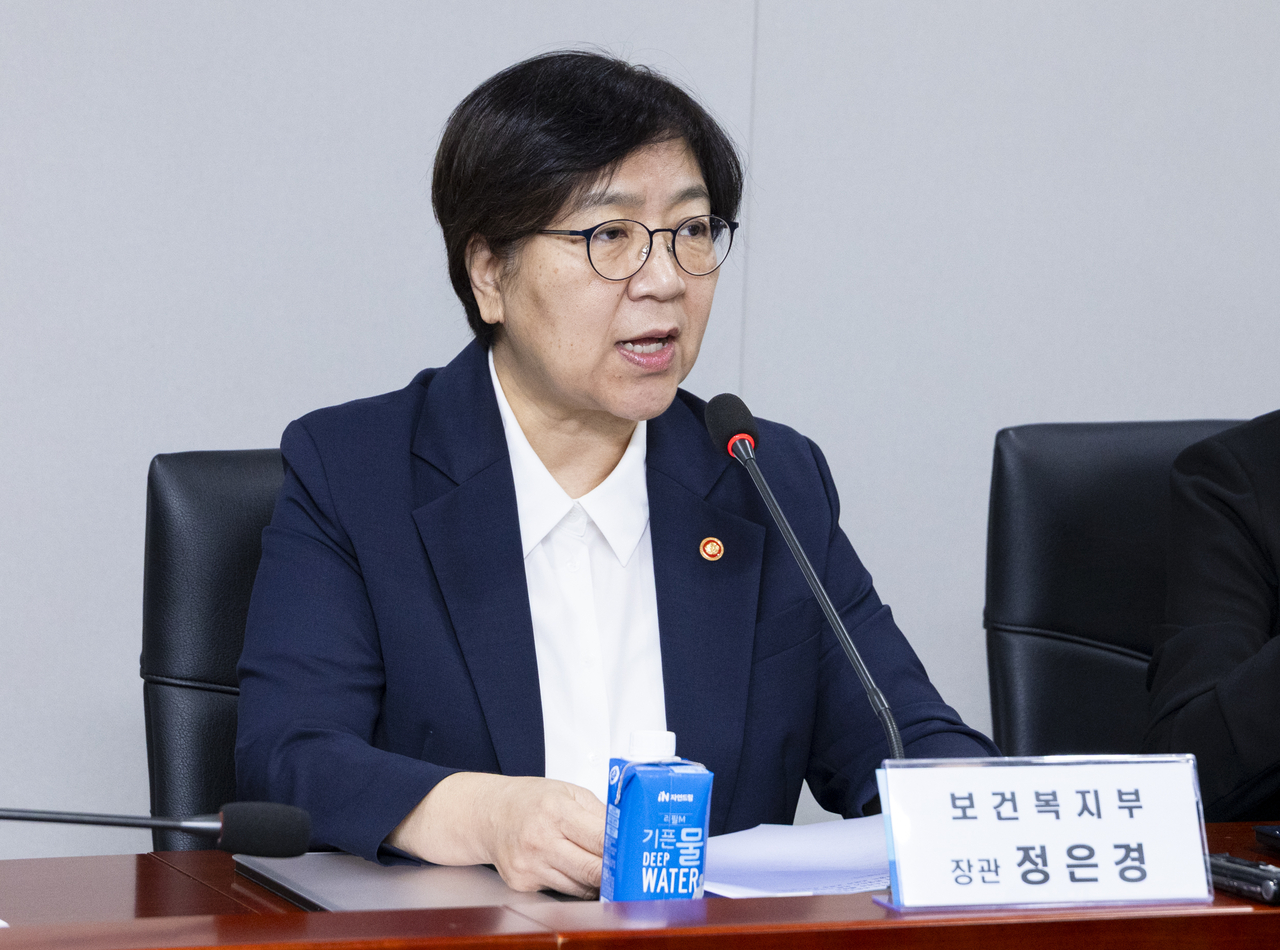
"AI is not meant to replace people, but to serve as an assistant that takes on simple and repetitive tasks," Health Minister Jeong Eun-kyeong said. "We will use AI to make care more sustainable and enhance the value of care work."
The ministry presented its plan, AI Transformation Road Map for Welfare and Care, at a Cabinet meeting Tuesday, outlining ways to combine AI, internet of things technology and robots with existing welfare and care services.
Reducing care workloads
Projections from the Korea Development Institute and the Bank of Korea cited by the ministry indicate that Korea could face a shortage of 990,000 care workers by 2043 as rapid population aging increases demand.
The road map aims to ease workloads by assigning some routine tasks to AI systems and using robots to assist with physically demanding duties.
At home, AI systems would monitor daily routines, health conditions and signs of danger around the clock, helping fill gaps between care workers’ visits.
Rather than relying solely on emergency calls or prolonged inactivity, the systems would analyze information including users’ routines, health conditions and conversations to detect early signs of trouble and connect them with support.
At care facilities, smart diapers and fall and motion sensors would help staff identify when residents need attention, reducing repetitive checks and allowing workers to focus more on direct care.
Easier access to welfare
From 2027, users will be able to describe their circumstances in everyday language to a generative AI system and receive recommendations for suitable welfare programs.
The government also plans to simplify applications, allowing users to move directly from consultations to applying for services.
For welfare officials, the ministry aims to automate more than 50 percent of routine administrative work, including document processing and data entry, by 2028.
Translation support is also under consideration, a ministry official said.
"We have only just begun developing the service in Korean, but we are also considering the development of additional features such as language translation support," the official said.
The road map also calls for legal and ethical safeguards, including human oversight, the right to request explanations, personal data protection, and systems to monitor AI errors and performance.
Testing before expansion
Alongside the household trials, public long-term care facilities are expected to begin piloting care robots in 2027. Community facilities such as welfare centers and daycare centers will also test technology-assisted care services.
Based on the results, the government plans to begin gradually expanding smart-home and smart-facility services in the public sector from 2028.
Over the longer term, the ministry plans to introduce mobile AI companion robots that combine conversation, safety monitoring and health management.
shwang9@heraldcorp.com